Why Flexible Office Space Is Ideal for Startups
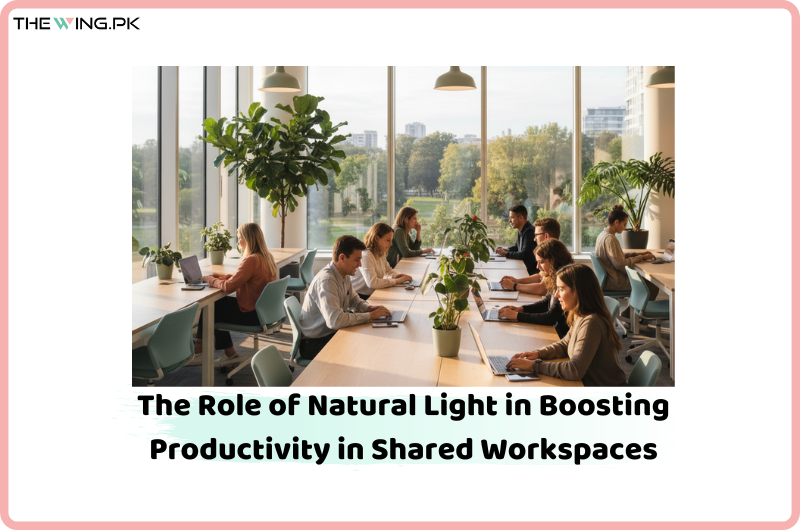
The early stages of a startup are defined by momentum, uncertainty, and relentless experimentation. Teams assemble quickly, ideas pivot without warning, and capital must be deployed with surgical precision. In this volatile environment, the physical workplace can either act as a catalyst for growth or a silent impediment. Traditional offices, rigid, capital-intensive, and contractually restrictive, often fail to accommodate the mercurial nature of young ventures. This is where flexible office space for startups emerges as a pragmatic and strategic alternative. Flexible workspaces have evolved far beyond shared desks and coffee machines. They now represent an ecosystem that blends adaptability, cost-efficiency, and professional infrastructure into a single offering. For startups seeking agility without sacrificing credibility, these environments provide a compelling solution. From financial prudence to cultural cohesion, flexible offices are reshaping how new businesses establish themselves and scale. Click here to learn about the best coworking space in Islamabad! Understanding the Startup Operating Reality Startups operate in a landscape marked by asymmetry. Resources are limited, timelines are compressed, and the margin for error is slim. Every operational decision, especially those tied to fixed costs, carries amplified consequences. Office space, historically viewed as a static necessity, has become a dynamic lever that can influence productivity, morale, and runway length. Unlike established enterprises, startups rarely possess the foresight to predict headcount, revenue stability, or geographic expansion with accuracy. Locking into long-term leases or investing heavily in fit-outs introduces friction at precisely the moment when fluidity is most valuable. Flexible office space for startups aligns more naturally with this operating reality, offering elasticity where rigidity once prevailed. The Evolution of the Modern Workplace The notion of work has undergone a quiet revolution. Advances in cloud computing, collaborative software, and remote connectivity have decoupled productivity from physical permanence. Yet, paradoxically, the demand for physical offices has not disappeared. Instead, it has transformed. Modern offices are no longer mere containers for desks. They are environments designed to foster collaboration, innovation, and brand identity. Flexible offices encapsulate this evolution by providing fully serviced, adaptable spaces that can be reconfigured as teams grow or shrink. This adaptability is not an ancillary benefit; it is foundational. Cost Efficiency Without Compromise Financial stewardship is a defining trait of successful startups. Every pound saved extends the runway and increases optionality. Traditional offices impose a constellation of upfront and ongoing costs security deposits, long leases, maintenance, utilities, furniture, and technology infrastructure. These expenses accumulate rapidly and often deliver diminishing returns. Flexible office space for startups consolidates these costs into a predictable, transparent pricing model. Monthly memberships or short-term agreements replace multi-year commitments. Utilities, internet, cleaning, and maintenance are bundled. The result is a leaner cost structure that preserves capital for core business activities such as product development and customer acquisition. Importantly, cost efficiency does not equate to austerity. Flexible offices often feature premium amenities, ergonomic furniture, high-speed connectivity, meeting rooms, and reception services—that would be prohibitively expensive for startups to procure independently. This balance between frugality and quality is a rare equilibrium. Scalability as a Strategic Asset Growth, when it arrives, is rarely linear. Startups may double their headcount in months or contract suddenly in response to market feedback. Fixed office spaces struggle to accommodate such volatility. Overcrowding stifles productivity, while excess space drains resources. Flexible office space for startups transforms scalability into a strategic asset. Teams can expand incrementally, adding desks or private offices as needed. Conversely, downsizing does not entail punitive penalties or protracted negotiations. This elasticity allows founders to align physical space precisely with operational needs, reducing waste and friction. Scalability also extends geographically. Many flexible office providers maintain networks across cities and countries, enabling startups to establish satellite offices or explore new markets without significant overhead. This geographic optionality is invaluable in an increasingly globalised economy. Professionalism From Day One Perception matters, particularly for startups courting investors, partners, and clients. Operating from a makeshift office or a residential address can undermine credibility, regardless of the quality of the underlying product. Flexible offices offer a professional facade that belies the company’s youth. Reception services, branded meeting rooms, and central business addresses confer legitimacy. Clients are welcomed into polished environments that signal seriousness and competence. For startups, this immediate professionalism can accelerate trust-building and shorten sales cycles. Platforms such as thewing.pk exemplify how flexible workspaces can merge professionalism with accessibility, offering startups a credible base without the burdens of traditional real estate commitments. Community and Serendipity Innovation rarely occurs in isolation. Startups thrive on the cross-pollination of ideas, exposure to diverse perspectives, and informal knowledge exchange. Flexible offices are intentionally designed to cultivate community, bringing together entrepreneurs, freelancers, and small teams under one roof. This proximity fosters serendipity. A conversation over coffee may yield a strategic partnership. A neighbouring team’s challenge may mirror one’s own, prompting collaborative problem-solving. These intangible benefits are difficult to quantify yet profoundly influential. For founders navigating uncharted territory, access to a community of peers provides both practical insights and psychological reinforcement. The shared experience of building something from nothing creates a unique camaraderie. Reduced Administrative Burden Operational complexity is an often-overlooked tax on startup energy. Managing leases, coordinating repairs, negotiating with service providers, and maintaining infrastructure consumes time and attention that could be better allocated elsewhere. Flexible office space for startups externalises these responsibilities. Facility management, IT support, and administrative services are handled by the provider, allowing teams to focus on strategic priorities. This reduction in cognitive load is subtle yet significant, freeing founders from distractions that erode momentum. Designing for Productivity and Wellbeing The physical environment exerts a measurable influence on cognitive performance and emotional wellbeing. Poor lighting, inadequate ventilation, and uncomfortable furniture degrade focus and morale. Startups, constrained by budgets, often compromise on these factors when leasing traditional offices. Flexible workspaces are typically designed with human-centric principles in mind. Natural light, ergonomic seating, acoustic optimisation, and thoughtfully curated communal areas are standard features. These elements contribute to sustained productivity and reduced burnout—critical considerations in high-pressure startup environments. Moreover, the ability to choose from
Why Flexible Office Space Is Ideal for Startups Read More »